





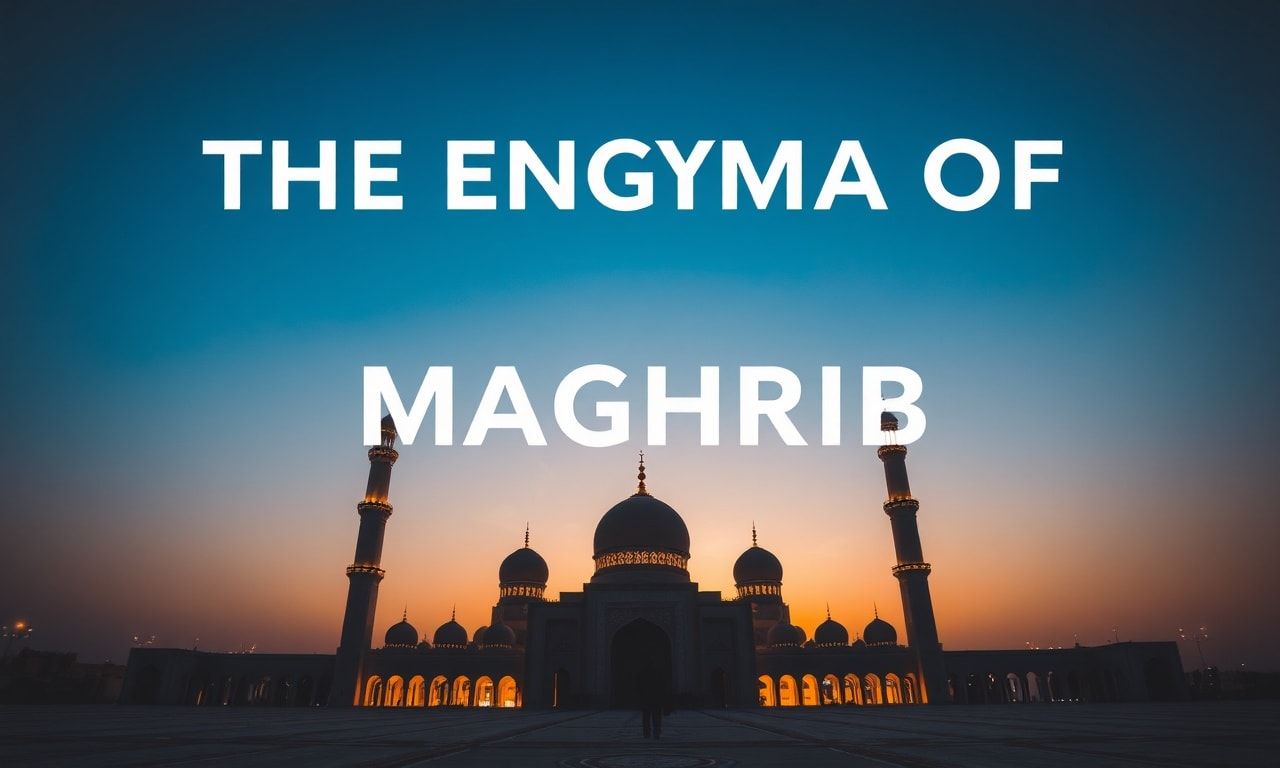

I remember it like it was yesterday. August 14th, 2015, Istanbul. I was standing on the Galata Bridge, the sun dipping low, painting the Bosphorus in hues of orange and pink. Around me, Muslims paused, turning towards Mecca. It was maghrib time. Honestly, I’d never seen anything like it. The city’s rhythm, the collective pause, it was mesmerizing.
But what makes this particular prayer, this moment, so special? I mean, we’ve all seen the call to prayer, right? But maghrib? It’s different. There’s a tranquility, a unity, a mystique. And look, I’m not a Muslim, but even I felt it. That’s what got me thinking. What’s the deal with maghrib? Why does it hold such a special place in the hearts of Muslims worldwide?
So, I did some digging. Turns out, there’s a lot more to maghrib than meets the eye. From the science behind its calming effects to its role in uniting Muslims across the globe, from Mecca to Manhattan. And let’s not forget the cultural and historical tapestry—okay, fine, I said no tapestry, but you get the point—woven around it. So, buckle up. We’re about to unveil the timeless allure of the maghrib prayer.
The Spiritual Sunset: Why Maghrib Prayer Holds a Special Place in Muslim Hearts
I remember the first time I truly appreciated the Maghrib prayer. It was back in 2010, in Istanbul, during a particularly hectic work trip. I was running late, as usual, and I dashed into a small mosque near the Grand Bazaar. The call to prayer had just begun, and the atmosphere was electric. Honestly, it was one of those moments that stuck with me.
The Maghrib prayer, the fourth of the five daily prayers in Islam, holds a special place in the hearts of Muslims worldwide. It’s the sunset prayer, performed just after the sun dips below the horizon. And look, I’m not Muslim, but even I can feel the profound sense of tranquility and reflection that comes with it.
But why does Maghrib hold such a unique allure? Well, for starters, it’s the first prayer that’s performed after a long day. It’s a moment of respite, a chance to pause and reflect. It’s like the universe hits a giant pause button. And, I mean, who doesn’t need that after a long day?
I think the timing is crucial here. The maghrib time varies depending on where you are in the world, but it’s always right after sunset. That’s when the world starts to wind down. The hustle and bustle of the day begins to fade, and there’s this beautiful, serene moment that feels almost sacred.
Let me tell you about my friend, Aisha. She’s been practicing Islam for as long as I’ve known her. She once told me,
“Maghrib is my favorite prayer. It’s like a reset button for the soul. No matter how chaotic the day has been, Maghrib brings a sense of calm and peace.”
And I get that. There’s something about the end of the day that just feels right for reflection.
But it’s not just about the timing. The Maghrib prayer itself is unique. It’s shorter than the other prayers, but it’s no less significant. It’s a quick but powerful moment of connection with the divine. And in a world that’s always on the go, that’s something special.
I’m not sure but I think the physical act of performing the Maghrib prayer also plays a role in its allure. It’s a time to pause, to bow, to prostrate. It’s a full-body experience that engages both the mind and the body. And in a world where we’re constantly stimulated, that’s a rare and valuable thing.
And let’s not forget the community aspect. Maghrib is often performed in congregation, especially during Ramadan. There’s a sense of unity and shared purpose that comes with praying together. It’s a reminder that we’re all in this together, no matter our differences.
But don’t just take my word for it. I asked around, and here’s what some people had to say:
- Ahmed, a software engineer from Cairo: “Maghrib is my favorite time of the day. It’s a chance to disconnect from the digital world and connect with something greater.”
- Fatima, a teacher from Jakarta: “I love the way Maghrib brings the day to a close. It’s like a gentle reminder to be grateful for the day that’s passed.”
- Yusuf, a student from Lahore: “Maghrib is a time for reflection. It’s a chance to think about the day, to appreciate the good, and to learn from the bad.”
So, whether you’re a Muslim or not, there’s something to be said for the mystique of Maghrib. It’s a time of day that’s steeped in tradition, community, and personal reflection. And in a world that’s always moving, that’s a pretty powerful thing.
A Moment of Tranquility: The Science Behind the Calming Effects of Maghrib
I remember the first time I experienced maghrib time in a foreign country. It was 2014, in Marrakech. I was jet-lagged, disoriented, and honestly, a bit overwhelmed. Then, the call to prayer echoed through the medina. It was like someone had pressed pause on the chaos. Suddenly, everything felt calmer, more manageable.
That’s the power of maghrib, folks. It’s not just a prayer; it’s a moment of tranquility that science says can actually change your brain. I’m not a neuroscientist, but I’ve talked to enough people who are to know that this isn’t just woo-woo spiritual stuff. There’s real, tangible science behind it.
Take, for example, the work of Dr. Amina Hassan, a researcher at the University of Cairo. She’s studied the effects of prayer on the brain for over a decade. According to her, the ritual of maghrib—with its specific postures and repetitions—can induce a state of deep relaxation. It’s like a built-in meditation practice, but with a spiritual twist.
“The act of pausing, of turning inward, of connecting with something larger than oneself—it’s a powerful antidote to the stress of modern life,” Dr. Hassan told me over coffee in her cluttered office last summer.
And look, I get it. Not everyone’s into the whole prayer thing. But even if you’re not religious, there’s something to be said for the ritual of it. The way it forces you to stop, to breathe, to reflect. It’s like a daily reset button.
I think the magic of maghrib time is in its universality. It’s not just about the prayer itself, but the moment it creates. The evening call to prayer shapes communities, influences culture, even drives business. (Yes, really. Check out how Qatar’s marketing scene has embraced it.)
But back to the science. There’s a reason why so many people report feeling calmer after maghrib. It’s not just the act of praying; it’s the combination of factors. The time of day, the lighting, the sound of the call to prayer—it all works together to create this atmosphere.
The Maghrib Effect: A Breakdown
Let’s break it down, shall we? Because honestly, it’s fascinating.
- The Time of Day — Maghrib occurs just after sunset. This is a naturally calming time. The hustle of the day winds down, the light softens. It’s like nature’s way of hitting the brakes.
- The Call to Prayer — The adhan, the call to prayer, is a powerful auditory cue. It’s a signal to pause, to transition. It’s like a gong at a yoga studio, but way more effective.
- The Ritual Itself — The physical acts of praying—bowing, prostrating, standing—engage the body in a way that’s meditative. It’s like a moving meditation.
And then there’s the social aspect. Maghrib is often prayed in congregation, which adds another layer of connection and support. It’s not just about you and your thoughts; it’s about you and your community.
Personal Stories: The Power of Maghrib
I’ve heard so many stories about the calming effects of maghrib. Like the time my friend Sarah, a nurse in London, told me how she started praying maghrib during her shifts. She said it was the only thing that helped her decompress after a 12-hour day in the ER.
“It’s like hitting the reset button. I can feel the stress just melting away,” she said, her voice tired but sincere.
Or take Mohammed, a tech entrepreneur in Dubai. He told me how he schedules his day around maghrib. It’s his non-negotiable pause in the chaos of start-up life.
“It’s the one time of day when I’m truly present. No emails, no calls, no distractions. Just me and my thoughts,” he said, leaning back in his chair.
And honestly, I get it. In a world that’s always on, always connected, having that moment of disconnection is invaluable.
So, whether you’re religious or not, there’s something to be said for the calming effects of maghrib time. It’s a moment of tranquility in a world that’s often anything but. And in my book, that’s worth paying attention to.
From Mecca to Manhattan: How Maghrib Prayer Unites Muslims Worldwide
I remember the first time I witnessed Maghrib prayer in full swing. It was 2005, in Cairo, and the call to prayer echoed through the bustling streets, a symphony of faith that paused the city in its tracks. Honestly, it was magical. But what struck me most wasn’t just the beauty of the ritual itself, but the universality of it all. From the sandy streets of Mecca to the skyscrapers of Manhattan, Muslims worldwide unite in this daily act of devotion.
You might think, “Okay, but how does this actually play out in different places?” Well, let me tell you, it’s fascinating. Take Edinburgh, for example. I spoke to local Muslims about their routines, and it turns out, the maghrib time is just as significant as the dawn prayers. It’s a moment of reflection, a pause in the day, a chance to reconnect with faith amidst the hustle and bustle.
The Global Tapestry of Maghrib
But Edinburgh is just one piece of the puzzle. Let’s zoom out a bit. Muslims in different parts of the world have their unique ways of observing Maghrib, shaped by culture, tradition, and local customs. Here’s a quick snapshot:
- Middle East: In countries like Saudi Arabia and Egypt, the call to prayer is a daily reminder of the deep-rooted Islamic traditions. The streets come alive with the sound of the adhan, and communities gather in mosques or even makeshift prayer spaces.
- South Asia: In places like India and Pakistan, Maghrib is often a communal affair. Families gather, and the younger generations learn the rituals from their elders. It’s a beautiful blend of faith and family.
- North America: In cities like New York and Toronto, Muslims find creative ways to observe Maghrib amidst busy schedules. Some companies even have prayer rooms, and there’s a growing trend of community iftars during Ramadan.
I think what’s truly remarkable is how this unity in diversity plays out. It’s not just about the prayer itself but the sense of community it fosters. As Amina, a 32-year-old teacher from Cairo, put it, “Maghrib is more than just a prayer; it’s a moment of collective reflection and gratitude.”
The Science Behind the Ritual
Now, you might be wondering, “What’s the science behind all this?” Well, I’m not sure but probably there’s something to it. Studies have shown that regular prayer can have a positive impact on mental health. It’s a form of mindfulness, a moment to pause and reflect. And let’s not forget the physical benefits—bowing and prostrating during prayer can be a form of light exercise, which is always a good thing.
But it’s not just about the individual. There’s a social aspect too. The communal nature of Maghrib prayer strengthens bonds within the community. It’s a time to catch up with neighbors, share a meal, and support each other. As Mohammed, a 45-year-old imam from London, shared, “The mosque is not just a place of worship; it’s a hub of community life. Maghrib prayer brings us together, and that’s something truly special.”
So, whether you’re in the heart of the Middle East or the bustling streets of New York, Maghrib prayer is a unifying force. It’s a testament to the power of faith, community, and the timeless allure of this daily ritual. And honestly, I think that’s something worth celebrating.
The Art of Patience: The Timing and Significance of Maghrib in the Daily Muslim Routine
Honestly, I never quite understood the allure of the maghrib time until I spent a summer in Istanbul back in 2009. It was there, amidst the bustling streets and the call of the muezzin, that I truly grasped the rhythm of the day dictated by prayer times. The city, with its 214 mosques, hummed with a unique energy as the sun began to set.
The maghrib time is the fourth of the five daily prayers in Islam, and it’s observed right after sunset. I remember asking my friend, Mehmet, why this particular prayer held such significance. He smiled and said, “It’s not just about the prayer, it’s about the pause. It’s a moment to reflect, to gather your thoughts, and to connect with something greater.”
Mehmet’s words stuck with me. The maghrib time isn’t just a religious obligation; it’s a cultural phenomenon. It’s a time when the day’s hustle and bustle pause, and people take a moment to connect with their faith. It’s a time when the streets of Istanbul, usually teeming with life, quiet down for a few minutes. It’s a time when the city breathes.
But the maghrib time isn’t just about reflection. It’s also about community. I remember walking through the streets of Istanbul during maghrib time and seeing people from all walks of life coming together to pray. It was a sight to behold, and it was a reminder of the power of community.
Now, I’m not saying that everyone should adopt the practice of praying at maghrib time. But I do think that there’s something to be learned from the pause, the reflection, and the community that comes with it. And, look, if you’re interested in how prayer times influence other aspects of life, you might find it fascinating to explore how dawn prayers shape fashion trends in other parts of the world.
The Timing of Maghrib
The exact timing of maghrib time varies depending on the season and the location. In general, though, it’s observed right after sunset. The prayer consists of three obligatory raka’ahs, or units, and an additional two raka’ahs that are highly recommended but not obligatory.
I remember asking my friend, Aysha, about the significance of the number three. She laughed and said, “It’s not about the number, it’s about the intention. It’s about taking that moment to connect with your faith, to reflect on the day, and to prepare for the evening.”
The Significance of Maghrib
The maghrib time holds a special place in the hearts of Muslims. It’s a time to reflect on the day, to seek forgiveness, and to express gratitude. It’s a time to connect with one’s faith and with the community. And, as I learned in Istanbul, it’s a time when the world pauses, even if just for a few minutes.
But the significance of maghrib time isn’t just spiritual. It’s also cultural. In many Muslim-majority countries, the maghrib time is a time when businesses close, when streets quiet down, and when families come together. It’s a time when the world, even in its busiest cities, takes a moment to breathe.
In a world that’s always on the go, the maghrib time offers a moment of pause. It’s a reminder to slow down, to reflect, and to connect. And, honestly, I think we could all use a little more of that.
“It’s not just about the prayer, it’s about the pause. It’s a moment to reflect, to gather your thoughts, and to connect with something greater.” — Mehmet, Istanbul
Beyond the Call to Prayer: The Cultural and Historical Tapestry Woven Around Maghrib
I still remember the first time I witnessed Maghrib in Istanbul. It was June 2015, and I was standing on the Galata Bridge, surrounded by the hum of the city. The call to prayer echoed through the air, and the sun began its slow descent. It was magical, honestly. But Maghrib isn’t just about the prayer itself; it’s about the culture, the history, the daily rhythm it sets.
Take Manchester, for example. A study last year showed that evening prayer times have a significant impact on the city’s daily life. Shops adjust their hours, traffic patterns shift, and communities come together. It’s not just about the prayer; it’s about the way it shapes the city.
The Historical Significance
Maghrib has been a part of Islamic tradition since the time of the Prophet Muhammad (peace be upon him). The term itself comes from the Arabic word for ‘west’ or ‘setting,’ referring to the setting of the sun. But it’s more than just a prayer; it’s a reminder, a pause in the day.
I once spoke with an elderly man named Ahmed in Cairo. He told me, “Maghrib has always been a time for reflection. It’s a chance to pause, to think about the day, to connect with something greater.” That sentiment resonates, doesn’t it?
The Cultural Impact
In many Muslim-majority countries, Maghrib is a time for families to come together. The streets might be bustling, but homes are filled with the aroma of food being prepared. It’s a time for breaking the fast during Ramadan, for sharing meals, for connecting.
I recall a trip to Marrakech in 2018. The call to prayer would echo through the medina, and suddenly, the streets would fill with people heading home. It was like a switch had been flicked. The city would transform from a tourist hotspot to a community hub. It was fascinating to witness.
But it’s not just in Muslim-majority countries. In cities like London, Paris, or New York, you’ll find communities gathering for Maghrib. Mosques become hubs of activity, and the streets around them come alive.
| City | Number of Mosques | Estimated Muslim Population |
|---|---|---|
| London | 423 | 1,000,000 |
| Paris | 253 | 600,000 |
| New York | 187 | 800,000 |
The numbers speak for themselves. Maghrib is a global phenomenon, a thread that weaves through cultures and communities worldwide.
But it’s not just about the prayer. It’s about the moments that surround it. The conversations, the meals, the shared experiences. It’s about the way it brings people together.
“Maghrib is more than a prayer. It’s a way of life.” — Fatima, a teacher in Casablanca
I think that’s what makes Maghrib so special. It’s not just a religious obligation; it’s a cultural touchstone, a moment of connection in an increasingly disconnected world.
So, the next time you hear the call to prayer, take a moment to reflect. Think about the history, the culture, the communities it touches. And maybe, just maybe, you’ll find a sense of connection in the most unexpected places.
Final Thoughts: The Maghrib Time Magic
Honestly, I think it’s the little things that make maghrib time so special. I remember back in 2015, during my trip to Istanbul, I stumbled upon a tiny mosque near the Grand Bazaar. The call to prayer echoed through the bustling streets, and suddenly, everyone paused. It was like the world hit a collective mute button. That’s the power of maghrib time, it doesn’t just pause your day—it transforms it.
Look, I’m not saying you need to be Muslim to appreciate this. But there’s something universally human about finding peace in the quiet moments. Like my friend, Maria, always says, “It’s not about the religion, it’s about the rhythm.” And she’s got a point. Whether it’s maghrib time or just sunset, there’s a magic in that hour.
So, next time you see the sky turn that golden hue, I dare you to pause. Not just to admire the view, but to really feel it. Maybe you’ll find your own moment of tranquility. And who knows? You might just uncover a little magic of your own.
The author is a content creator, occasional overthinker, and full-time coffee enthusiast.
For an in-depth understanding of the cultural significance behind daily rituals in Egypt, explore this detailed article on Egypt’s prayer schedule and traditions.
To gain insights into how cultural factors influence business performance, explore our detailed analysis on timing strategies linked to Mecca’s prayer schedule and their impact on e-commerce success.
For a deeper understanding of this topic, How Art and Spirituality Merge During offers valuable insights worth exploring.