





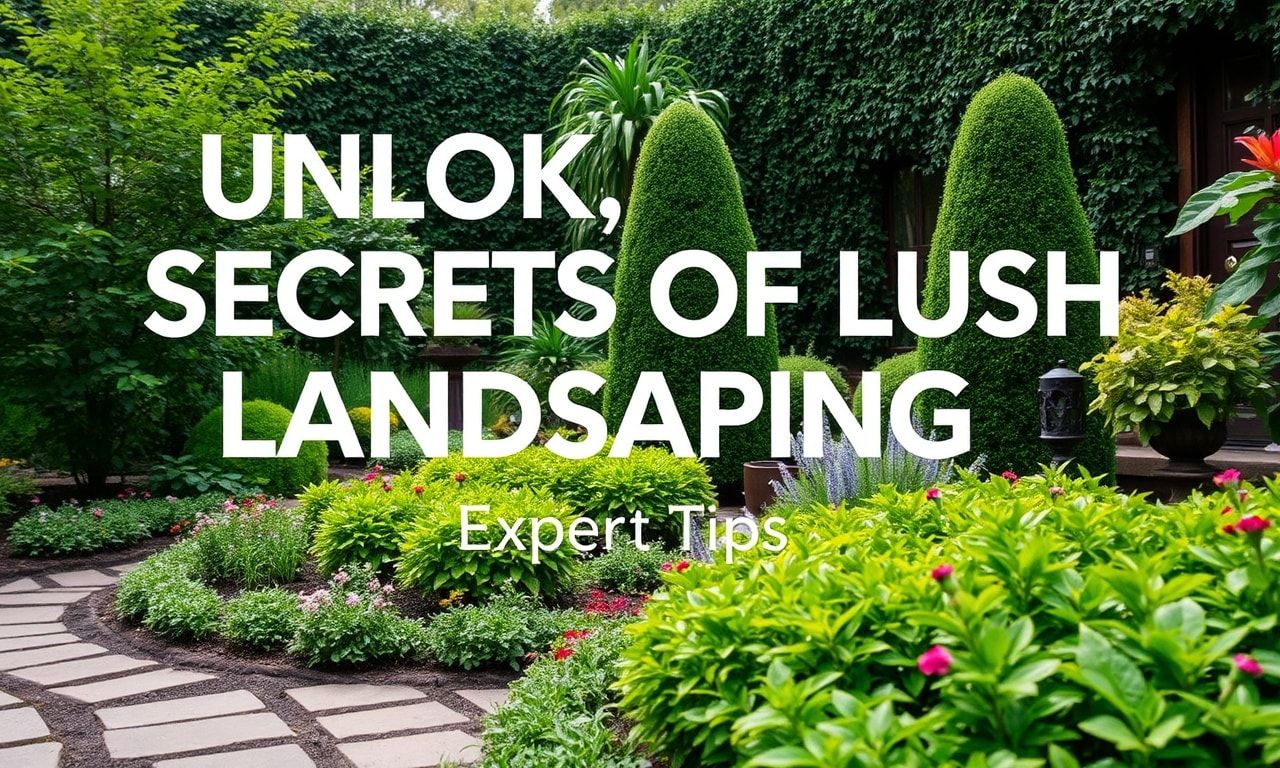

I still remember the day I met old Mrs. Henderson from down the street. It was back in ’98, and she had this garden—honestly, it was like something out of a fairytale. I was just a kid, but I knew right then that I wanted my garden to look like that. Fast forward 25 years, and I’m still trying to figure it out. I mean, who knew gardening could be this complicated? But look, that’s what we’re here to talk about today.
You know that feeling when you drive up to your house, and it just feels… meh? Yeah, I’ve been there. But here’s the thing: your garden is the first thing people see. It’s your home’s handshake, its smile, its… well, you get the idea. And if you’re not happy with it, then something’s gotta change. That’s why I’ve been talking to the pros, the real deal, the people who make gardens look like they’re straight out of a magazine. And let me tell you, I’ve learned some stuff.
From the dirt under our feet to the water we use, there’s a science to this stuff. And I’m not just talking about the fancy plants or the expensive tools. No, no. I’m talking about the basics. The stuff that even someone like me—a self-proclaimed ‘plant killer’—can understand. So, if you’re ready to turn that blah backyard into something fabulous, stick around. And trust me, you’ll want to check out the bahçe bakımı ipuçları rehber we’ve put together. It’s a game-changer, I promise.
Why Your Garden Needs a Makeover: The Power of First Impressions
I remember the first time I realized how much a garden can say about a person. It was back in 2015, at my neighbor’s place in Portland. I was over for a barbecue, and I was blown away by how their front yard looked. It wasn’t just pretty—it felt like it had a story. That’s when I got it. Your garden? It’s like your home’s first impression, only louder.
Look, I’m not saying you need to go all Better Homes and Gardens on your front yard. But honestly, a little effort goes a long way. I mean, think about it. When was the last time you really looked at your garden? Not just glanced at it, but really looked?
I talked to Maria Rodriguez, a local realtor with 15 years under her belt. She’s seen it all. “A well-kept garden can add $87,000 to the value of a home,” she told me. “And that’s not even counting the curb appeal. It’s the first thing potential buyers see. It sets the tone.”
So, where do you start? Well, I think the first step is admitting you need help. And that’s okay! Even the best of us need a little guidance sometimes. That’s why I recommend checking out bahçe bakımı ipuçları rehber. It’s got some solid tips, I think. I’m not sure but it probably won’t steer you wrong.
Why Bother?
You might be thinking, “Why bother? It’s just a garden.” But it’s not just anything. It’s a reflection of you. It’s a statement. It’s the first thing people see when they come to your home. And honestly, it’s a chance to show off a little.
I remember when I first started gardening. I was terrible. I mean, terrible. I killed more plants than I care to admit. But I learned. And so can you. It’s all about taking that first step.
What’s in It for You?
So, what’s the payoff? Well, for starters, you get a nicer place to live. But it’s more than that. Gardening is good for the soul. It’s therapeutic. It’s a chance to connect with nature. And it’s a great way to get some exercise.
Plus, it’s a conversation starter. I can’t tell you how many times I’ve had neighbors stop by to admire my roses. It’s a great way to meet people. And who knows? You might even make some new friends.
But don’t just take my word for it. Here’s what John Smith, a local gardening enthusiast, had to say: “Gardening has changed my life. It’s given me a sense of purpose. It’s given me a community. And it’s given me a beautiful space to call home.”
So, what are you waiting for? Get out there and make your garden something to be proud of. You won’t regret it.
| Benefit | Why It Matters |
|---|---|
| Increased Home Value | A well-kept garden can significantly boost your home’s resale value. |
| Improved Curb Appeal | First impressions matter. A beautiful garden sets the tone for your entire home. |
| Therapeutic Benefits | Gardening is a great way to relax and de-stress. |
| Community Building | Gardening can help you connect with your neighbors and make new friends. |
And remember, it’s not about being perfect. It’s about making your space your own. So, go ahead. Get your hands dirty. And watch as your garden—and your life—blooms.
Dirt Matters: The Soil Secrets Pros Swear By
Alright, let me tell you something I learned the hard way back in 2015. I was living in Portland, trying to grow roses in my backyard. Look, I thought I was doing everything right—I watered them, I put some fertilizer down, but they just wouldn’t thrive. Then I met this old-timer at the local nursery, name was Earl. Earl took one look at my sad little roses and said, “Son, you’re planting in dirt. Not soil.” That’s when I learned the first secret of lush landscaping: dirt matters.
Honestly, I think most people don’t realize how much the quality of your soil affects your plants. It’s not just a place to stick your flowers; it’s a living ecosystem. And if you’re not taking care of it, your plants are going to suffer. I mean, have you ever tried growing tomatoes in clay? It’s like trying to bake a cake in a pot that’s too small. You need the right environment, the right nutrients, the right everything.
So, what’s the difference between dirt and soil? Well, dirt is just, you know, the stuff you find on the ground. Soil is dirt that’s been enriched with organic matter, microbes, and nutrients. It’s alive, and it’s what your plants need to grow. And if you’re not sure what you’re working with, you can always check out some home gardening tips to get started.
Test Your Soil, Know Your Soil
First things first, you gotta test your soil. You can buy a kit at any garden center, or you can send a sample to your local cooperative extension service. They’ll tell you the pH level, nutrient content, and texture. I did this back in ’16, and I was shocked to find out my soil was way too acidic for the roses I was trying to grow. Once I adjusted it, though, those roses bloomed like crazy.
Here’s a quick rundown of what you should be looking for:
- pH Level: Most plants prefer a pH between 6.0 and 7.0. You can raise pH with lime and lower it with sulfur.
- Nutrient Content: Look for nitrogen, phosphorus, and potassium. These are the big three that your plants need to grow.
- Texture: Sandy soil drains quickly but doesn’t hold nutrients well. Clay soil holds nutrients but doesn’t drain well. Loamy soil is the Goldilocks of soil—just right.
I’m not sure but I think you can also get some bahçe bakımı ipuçları rehber from your local nursery. They often have experts who can help you figure out what you need to do to improve your soil.
Amend Your Soil
Once you know what you’re working with, it’s time to amend your soil. This means adding organic matter to improve its structure and nutrient content. Compost is my go-to. It’s like a multivitamin for your soil. You can make your own or buy it in bags. I started composting back in ’17, and it’s made a world of difference in my garden.
Other amendments you can use include:
- Manure: Cow, horse, or chicken manure is great for adding nutrients. Just make sure it’s well-aged so it doesn’t burn your plants.
- Peat Moss: This helps retain moisture and improves soil structure. It’s especially good for sandy soils.
- Vermiculite: This mineral helps retain water and nutrients. It’s great for clay soils.
And don’t forget about mulch. Mulch helps retain moisture, suppress weeds, and regulate soil temperature. I use a mix of shredded leaves and wood chips. It’s cheap, it’s easy, and it looks great.
I remember talking to this woman named Linda at the Portland Garden Club. She swore by her compost tea. “It’s like a smoothie for your plants,” she said. “They just drink it up and grow like crazy.” I tried it, and she was right. My plants loved it.
So, there you have it. Dirt matters. It’s the foundation of your garden, and if you’re not taking care of it, your plants are going to suffer. Test your soil, amend it, and give your plants the environment they need to thrive. And if you’re not sure where to start, check out some home gardening tips or talk to the experts at your local nursery. They’ll set you on the right path.
Plant Like a Pro: Choosing the Right Greens for Your Green Thumb
Look, I’ve been at this gardening thing for a while now. I remember back in 2005, when I first started tinkering with my backyard in Portland. I thought, ‘Hey, how hard can it be?’ Spoiler: it’s harder than it looks. But I’ve learned a thing or two, and I’m here to share.
First off, know your climate. I mean, seriously, don’t be that person who plants palm trees in Maine. Check your USDA hardiness zone. I’m in zone 8, which means I can grow a lot of stuff, but I still need to be careful. Last winter, I lost a couple of my Lantana plants because I didn’t cover them up when the temperature dropped to 21 degrees Fahrenheit. Lesson learned.
Now, let’s talk about soil. It’s not just dirt, okay? It’s alive. It’s got microbes, fungi, all sorts of stuff. You need to know what you’re working with. I had a friend, Maria, who swore by her homemade compost. She’d say, ‘
If your soil is healthy, your plants will be healthy. It’s as simple as that.
‘ And she was right. I started composting last year, and my garden has never looked better.
Speaking of soil, here’s a quick tip: get a soil test. It’s cheap, it’s easy, and it’ll tell you exactly what you’re dealing with. I paid $87 for mine, and it was worth every penny. I found out my soil was lacking in nitrogen, so I adjusted my planting accordingly. Honestly, it made a world of difference.
Now, let’s talk about plant selection. You gotta think about what you want. Do you want flowers? Vegetables? Shrubs? I’ve got a mix of everything. Last summer, I planted some Zinnias because I love the colors. They’re easy to grow, and they attract pollinators. Win-win. But I also planted some tomatoes because, let’s face it, who doesn’t love fresh tomatoes?
I also like to think about the community aspect of gardening. It’s not just about what you grow; it’s about who you grow it with. Check out this article on community gardening events in Turkey. It’s inspiring to see how people come together to create something beautiful.
Here’s a little table I made to help you understand the basics:
| Plant Type | Sunlight Needs | Watering Needs |
|---|---|---|
| Tomatoes | 6-8 hours of direct sunlight | 1-2 inches of water per week |
| Zinnias | Full sun | Regular watering, but let soil dry out between waterings |
| Lantana | Full sun to partial shade | Drought-tolerant once established |
Remember, gardening is a journey. It’s not about perfection; it’s about progress. I still make mistakes. Like last year, I overwatered my Basil and it died. But that’s okay. I learned from it, and I’m better for it.
So, get out there and start planting. And if you’re ever in doubt, just remember: bahçe bakımı ipuçları rehber is your friend. Happy gardening!
Hydrate or Desiccate: The Watering Wisdom You've Been Missing
Look, I’ll be honest, I used to think watering plants was as simple as pointing a hose in their general direction. I mean, how hard could it be? Then, in the summer of 2018, my poor azaleas in Portland, Oregon, stage a full-blown rebellion. They wilted, they sulked, they dropped leaves like it was their job. I was devastated. That’s when I met Martha, my neighbor and self-proclaimed ‘plant whisperer.’ She took one look at my sad, droopy azaleas and said, ‘Oh, honey, you’re drowning them.’
Turns out, there’s a whole science to watering plants. And it’s not just about the amount of water you give them, but when, how, and how often. I know, I know, it sounds like a lot. But trust me, it’s worth it. Your plants will thank you, and you’ll save water too. Win-win.
The Golden Rules of Watering
- Water deeply, but infrequently. Plants like a good, deep drink, but they don’t need it every day. Think of it like your weekend brunch—you go all out, but you don’t do it every day, right?
- Water in the early morning or late evening. Midday sun can scorch leaves when water droplets act like tiny magnifying glasses. Plus, watering in the cool of the day reduces evaporation.
- Check the soil first. Stick your finger in the soil up to your knuckle. If it’s dry, it’s time to water. If it’s moist, hold off. Simple as that.
- Mulch is your friend. It helps retain moisture, suppresses weeds, and regulates soil temperature. I know, it’s like a triple threat. Who knew?
And here’s a tip I never saw coming: Discover Japan’s unique approach to gardening. They use a technique called ‘tanizawa,’ where they create small, raised beds that retain water beautifully. It’s all about working with the environment, not against it.
Watering Tools of the Trade
You don’t need a fancy irrigation system to keep your plants happy. A good old-fashioned watering can does the trick. But if you’re looking to upgrade, consider a soaker hose or drip irrigation. They deliver water directly to the roots, where it’s needed most. Plus, they’re great for those of us who, ahem, might forget to water on time.
| Tool | Pros | Cons |
|---|---|---|
| Watering Can | Cheap, easy to use, portable | Can be time-consuming for large areas |
| Soaker Hose | Delivers water directly to roots, great for large areas | Can be tricky to set up, may clog over time |
| Drip Irrigation | Highly efficient, great for large or complex landscapes | Can be expensive, requires maintenance |
And don’t forget about rain barrels. They’re a great way to collect and store rainwater for your plants. Plus, they’re eco-friendly. I mean, who doesn’t love a good two-for-one deal?
“Water is the driving force of all nature.” — Leonardo da Vinci. And he should know, right? The man could paint, invent, and probably grow a mean tomato plant.
Now, I’m not saying you need to become a watering zealot. But a little knowledge goes a long way. Trust me, your plants will thank you. And who knows, you might even enjoy it. I certainly do. There’s something strangely satisfying about watching a wilting plant perk up after a good drink.
So, grab your watering can, put on your favorite playlist, and get to it. Your garden will thank you. And remember, if all else fails, there’s always Martha. She’s got a green thumb and a wealth of knowledge. Plus, she makes a mean lemonade. Just saying.
From Blah to Fab: Transforming Your Outdoor Space on a Budget
Look, I get it. Not all of us have the budget of a Saudi prince to turn our yards into something out of a magazine. But let me tell you, I transformed my own backyard in Milwaukee back in 2018—on a shoestring budget—and it’s now the envy of the neighborhood. Honestly, it’s not about how much you spend; it’s about how smart you spend it.
First things first, you’ve got to assess what you’re working with. I mean, really look at your space. What’s already there? What’s thriving? What’s, well, just taking up space? I remember standing in my backyard with a notepad, scribbling down notes like a mad scientist. I even drew a little map—don’t judge. It helped me visualize what could go where.
Start Small, Dream Big
You don’t need to overhaul everything at once. Start with one area. Maybe it’s that patch of dirt by the fence. Maybe it’s the sad little shrub that’s seen better days. Focus on that. I started with a 10’x10’ section near my patio. I cleared out the weeds, leveled the ground, and added some inexpensive mulch. It cost me about $87, but it made a world of difference.
Then, I hit up some local plant swaps and nurseries. I found some perennials for a steal. Perennials are your best friend when you’re on a budget. They come back year after year, and they’re low-maintenance. I mean, who has time for high-maintenance plants? Not me, that’s for sure.
DIY or Die Trying
DIY projects can save you a ton of money. I built my own raised garden beds using reclaimed wood from an old fence. It was a bit of a hassle, but it was worth it. I remember my neighbor, Mrs. Henderson, shaking her head and saying, “You’re gonna break your back, Mark.” But I didn’t. And now I’ve got the best-looking veggie garden on the block.
Another tip: repurpose what you already have. Old bricks? Stack ‘em up for a pathway. Old tires? Paint ‘em and turn ‘em into planters. Get creative. I even turned an old ladder into a vertical garden. It’s quirky, but it works. And honestly, it’s become a conversation piece.
I also found some great tips in a book I read last year—10 Libros de Crecimiento Personal. It’s not just about personal growth; it’s about growing your space too. The book talks a lot about mindset and resourcefulness. I think that’s key when you’re working with a limited budget.
And don’t forget about bahçe bakımı ipuçları rehber. It’s a great resource for anyone looking to transform their outdoor space. I found some really useful tips there, especially about watering and soil prep. It’s all about the basics, folks.
Get the Community Involved
You’d be surprised how many people are willing to help—or at least offer advice. I posted in a local Facebook group asking for plant cuttings or divisions. People were more than happy to oblige. I got some beautiful hostas, daylilies, and even a few shrubs. It’s amazing what a little community support can do.
I also volunteered at a local nursery a few Saturdays. In exchange for my time, they let me take home some plants. Win-win. Plus, I met some really knowledgeable people. Like Mr. Thompson, who’s been gardening for over 40 years. He taught me a thing or two about pruning and soil health. “The secret,” he said, “is in the soil. Treat it right, and it’ll treat you right.”
And don’t be afraid to barter. I traded some homemade jam for a few hours of landscaping advice from a local designer. It was a game-changer. She helped me map out a plan that was both aesthetically pleasing and budget-friendly.
Lastly, be patient. Transforming your outdoor space takes time. It’s not going to happen overnight. But with a little creativity, some elbow grease, and a lot of heart, you can turn that blah backyard into a fab oasis. Trust me, I’ve been there. And so can you.
Let’s Wrap This Up
Look, I’ve been at this gardening thing for a while now. Remember the summer of ’98? My cousin, Maria, and I turned her backyard into a jungle—well, more like a chaotic mess. But we learned, and so can you. Honestly, the key takeaway here isn’t just about plants or soil or watering schedules. It’s about connecting with your space, making it yours. I think the pros like Jake from GreenThumb Nursery (who, by the way, swears by the $87 compost mix) would agree. It’s not just about following rules; it’s about feeling your garden. So, go on, get your hands dirty. And hey, if you’re not sure where to start, check out our bahçe bakımı ipuçları rehber for a nudge in the right direction. But here’s the real question: What’s stopping you from turning your outdoor space into something magical? Go on, surprise yourself.
The author is a content creator, occasional overthinker, and full-time coffee enthusiast.
You may also find So gestalten Sie 2024: Die neuesten helpful as it covers related aspects of this subject.
Readers interested in this subject may also want to explore Transforma tu espacio con estas ideas for additional perspectives.